Studio & smart classroom setup · Dehradun · Kanpur · Delhi NCR

Electronics and Mechatronics Lab Equipment for CBSE Composite Skill Labs

Short answer: CBSE's Electronics and Mechatronics list includes 4 each of Arduino UNO, ESP32, breadboards, DC and servo motors, sensors (IR, PIR, ultrasonic, soil moisture, humidity, DHT11, MQ-5), relays, LCD and 7-segment displays, motor drivers, digital multimeters and soldering kits, plus hand tools and consumables such as resistors, LEDs, jumper wires and batteries.

By the Amica Smart Learn team · Updated 29 November 2026 · Tool list from CBSE's official Composite Skill Lab guidelines

Deadline: schools already affiliated to CBSE must set up the Composite Skill Lab by 22 August 2027; schools seeking fresh affiliation need it before affiliation (CBSE Circular Skill-13/2026).
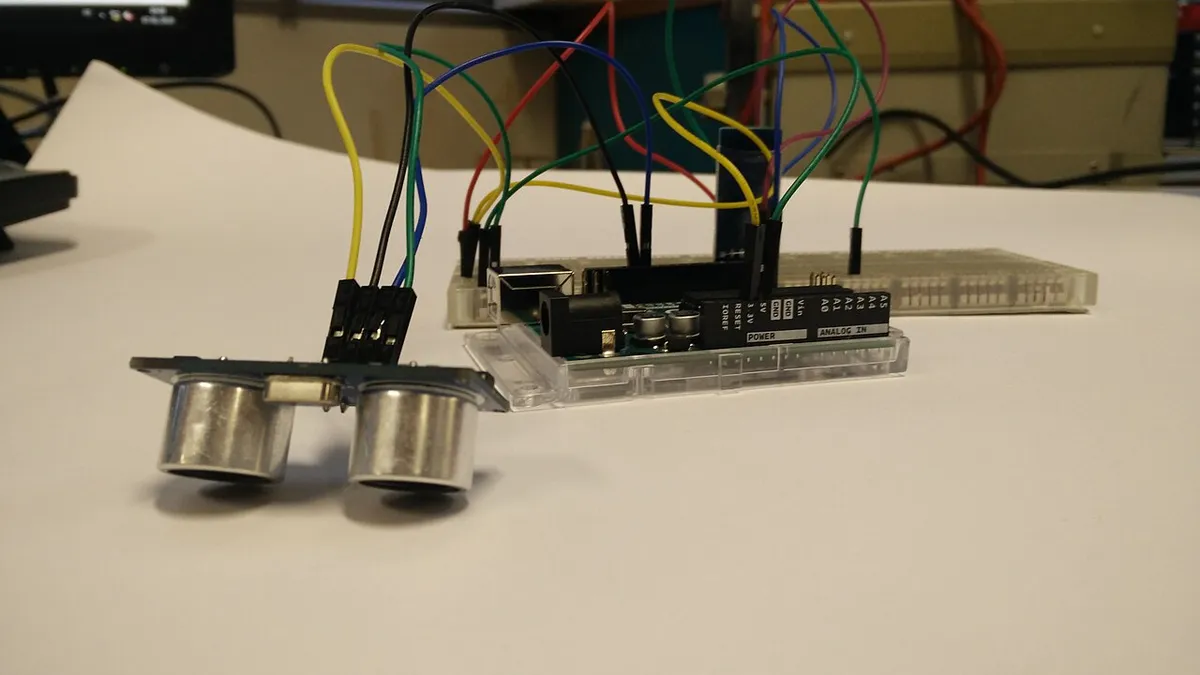
Arduino UNO board with ultrasonic sensor wired on a breadboard
An Arduino UNO with an ultrasonic sensor on a breadboard, the kind of project this sector builds. Photo: Pradana Aumars, CC BY-SA 4.0, via Wikimedia Commons (cropped).

Electronics and Mechatronics is one of the skill sectors CBSE lists for the Composite Skill Lab, under Working with Machines and Materials. CBSE calls its tool lists suggestive: a school equips only the sectors it chooses, with at least three skill subjects that together cover all three forms of work. This page sets out what CBSE lists for Electronics and Mechatronics, what the room needs, and how we set it up. For the full picture, start with our CBSE Composite Skill Lab setup page.

What does CBSE's Electronics and Mechatronics tool list include?

The table below is CBSE's suggested list for Electronics and Mechatronics, with quantities for a class of 40.

ItemSpecification (as suggested by CBSE)Qty
Arduino UNO along with CableATmega328P – 8-bit AVR family microcontroller, equivalent or better. Operating Voltage: 5V Digital I/O Pins: 14 (of which 6 provide PWM output) PWM Digital I/O Pins: 6 Accessories: Case shell enclosure, compatible USB cable (length - 6 inch or more)4
BreadboardSolderless 400-pin breadboard4
DC Motor12V DC Gear 150 RPM4
DHT 11 sensorOperating Voltage: 3.5V to 5.5V Operating current: 0.3mA (measuring) 60uA (standby) Output: Serial data Temperature Range: 0°C to 50°C Humidity Range: 20% to 90% Resolution: Temperature and Humidity both are 16- bit Accuracy: ±1°C and ±1%4
Digital MultiMeterDigital Multimeter Voltage Current Resistance-7 functions + 19 ranges to cover DC voltage 200mV to 1kV4
Digital Pen Electric TesterVoltage tester4
ESP32I2C, 1 wire, plug and play4
Hand Tools Set(Bits, Hammer, Hex, Keys, Knife, pliers, Ratchet, Screwdriver, Sockets, Spanners, Drilling machine and Bench Grinder)2 sets
HandsawSize 6 inch4
Hot Glue GunWorks with standard 0.5-inch glue sticks. Temperature - 230 to 280 degrees Celsius.4
Humidity SensorOperating range: 20 – 95 % RH Temperature: 0 - 60 Celsius Power supply: 1.5V AC (Max sine) Operating frequency: 500Hz - 2kHz4
I2C ModuleOperating Voltage: 5V DC I2C control using PCF8574 Can have 8 modules on a single I2C bus I2C Address: 0X20~0X27 (the original address is 0X20, you can change it yourself via the onboard jumper pins)4
IR SensorBoard Size 3.2 x 1.4cm Working voltage 3.3 to 5V DC Operating voltage 3.3V: ~23 mA, to 5V: ~43 mA Detection range 2cm – 30cm (Adjustable using potentiometer) Active output level the output is “0” (Low) when an obstacle is detected4
L298P Motor DriverL298P Motor Driver Shield or relative Driver Shield4
LCD DisplayDot matrix LCD display. 16 characters X 2 lines. I2C4
MQ-54
PIR Sensor4
Pliers: 4.5-inch sizeLong Nose Plier External Straight4
Precision Screwdriver Set6 Piece Precision Screwdriver Set Types: PH0, PH1, Flat head - 1.4mm, 2mm, 2.4mm, 3mm1
Relay5V 10A - 2 Channel Relay Module. Compatible with Arduino.4
Screwdriver40 pc multi-purpose screwdriver set4
7 Segment DisplayLED 4-Digit Display Module Voltage Rating: 2.4V to 5.5V 4-Pin interface: Vcc, Gnd, Data, Clock4
Servo MotorPosition Servo Angle based Metal Gear Small Servo Metal Gear Continuous Metal Gear Servo 360 Small Servo Plastic Gear4
Soil Moisture SensorFC-28 with LM293 comparator Operating Voltage: 3.3V to 5V.4
Soldering Helping handSpecifications: Adjustable crocodile holding clamps/clip. Soldering iron holder. LED light. Magnifying lens.4
Soldering KitVariable Wattage of Soldering Iron: 15-30 watts/230 volts 4 Equipment Soldering Iron Temperature Range: 280°C to 450°C Desoldering Pump, Soldering Flux (Paste) 100 grams, Desoldering Copper Braid (Solder Wick) - 1.5m*2mm Compatible Soldering Tip - Bevel, Chisel, Conical - 5 each per kit. Soldering Wire: 20/22 AWG soldering Wire with rosin core flux (100 Grams)4
Ultrasonic Sensor Module HC04Working Voltage - DC 5V Working current - 15 mA Working Frequency - 40 Hz Range - 1 cm to 4 m Effectual Angle - <15° Measuring Angle - 30° Resolution - 0.3 cm4
Water PumpDC12V 3W Submersible Water Pump4
Wire StrippersWire Stripper Cutter Plier with Spring -26x6x20 cm (L x W x H)4

Consumables listed by CBSE:

  • 9V Battery
  • A4 Size Sheet
  • Active Buzzer
  • Battery clip/Cap
  • Berg Strips
  • Berg Strips
  • Capacitor
  • Cardboard
  • Chart Papers
  • Coin Cell
  • Conductive Tape or Aluminium Foil
  • Cotton Thread
  • Diode
  • General Purpose Solderable Board
  • Hand Tools Set
  • Hook Up Wire
  • Jumper Cable
  • Jumper Cable
  • Jumper Cable
  • LED
  • Paper Cutter
  • Potentiometer
  • Pulley
  • Resistor Kit
  • Safety Mask
  • Sand Paper
  • Toggle switch
  • Transistor

See every sector side by side in our CBSE Composite Skill Lab equipment list.

What do students learn in the Electronics and Mechatronics section?

  • Basic circuits, measuring with a multimeter and safe soldering
  • Arduino and ESP32 programming with sensors and motors
  • IoT projects such as automatic plant watering and smart alarms
  • Robotics and mechatronics basics linked to Industry 4.0

What does the room need for Electronics and Mechatronics?

  • Work tables with sockets close by and a soldering station area away from fabric and paper
  • Keep sensors and small parts in labelled stackable boxes
  • Safety masks and a helping-hand clamp for soldering, as in the CBSE list
  • An Atal Tinkering Lab, if you have one, can be used for this sector

General room rules (600 sq ft, or two rooms of 400 sq ft, ventilation, 15A and 5A sockets, safety corner) are covered in our Composite Skill Lab layout and furniture guide.

How do we set up the Electronics and Mechatronics section?

  1. Plan: we confirm the sectors you have chosen and mark the Electronics and Mechatronics area on your room layout.
  2. Supply: every tool and starter consumable in the CBSE list for your class size, plus any upgrades you ask for.
  3. Install: mounting, wiring, pegboards, labels and storage, so tools are visible and safe.
  4. Train: a hands-on session for the teachers who will run the practicals.
  5. Hand over: an asset list and photos for your records.

Schools often pair this sector with AI Integration and Shaping Materials.

Setting up your Composite Skill Lab?

Call or WhatsApp +91 91251 61262 for a room plan, equipment list for your chosen sectors and a written quote. We supply, install and train across India.

Frequently asked questions

What is in the CBSE electronics skill lab kit?

Arduino UNO and ESP32 boards, breadboards, DC and servo motors, a range of sensors, relays, LCD and 7-segment displays, motor drivers, multimeters, soldering kits, hand tools and electronic consumables, mostly in sets of 4 for 40 students.

Can we use our Atal Tinkering Lab?

Yes, CBSE says an ATL or Agile ATL can be used to deliver this sector, but the ATL cannot be converted into the Composite Skill Lab.

Which classes is it for?

The Composite Skill Lab serves Classes VI to X for skill modules, and the lab can also support Classes XI–XII.

Do you supply consumables too?

Yes, we supply the tools and the first set of consumables, and can refill them.

Sources

  • CBSE Circular No. Skill-13/2026, "Guidelines for Establishment of Composite Skill Labs in CBSE schools", 20 March 2026 (refers to Circular Skill-75/2024 of 23 August 2024).
  • CBSE Department of Skill Education, "Guidelines for setting up Composite Skill Lab in Schools", tool lists in Annexure 1 (quantities for a class of 40).
  • Photo credit: Photo: Pradana Aumars, CC BY-SA 4.0, via Wikimedia Commons (cropped).

For More Information Contact us